
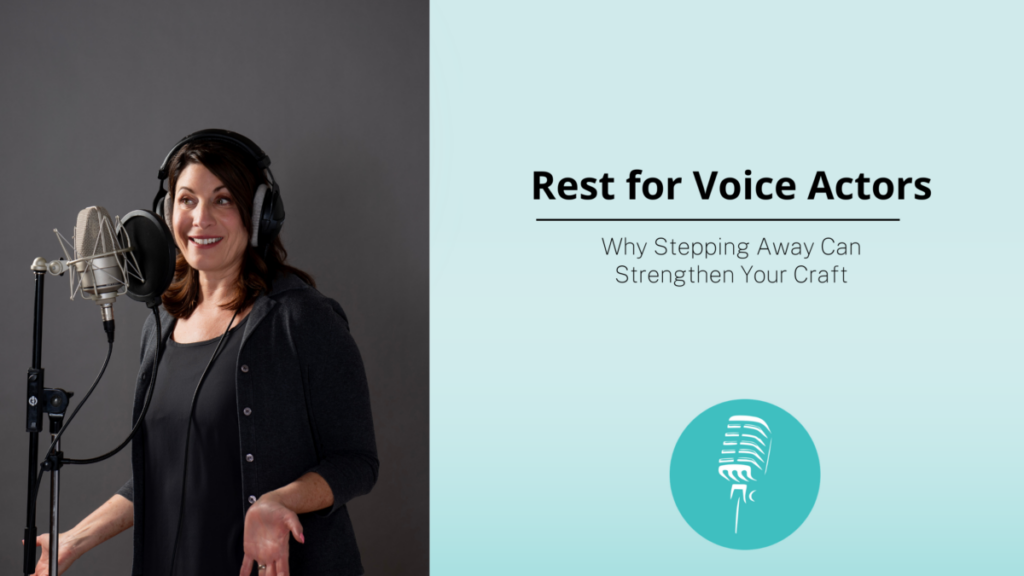
This week, my voice is officially on vacation.
I’m trading studio time for sunsets in Spain, and while that may sound like a simple break, it is really about something deeper. It is about recovery, perspective, and reconnecting with the life experiences that keep me inspired as both an artist and a human being.
As voice actors, we spend so much time using our voices. We audition, record, listen back, adjust, perform again, and keep reaching for the next stronger take. That kind of creative output is part of the work, but it also requires care. Rest for voice actors is not a luxury or a sign that you are falling behind. It is part of how you protect the instrument, refill the creative well, and return to the mic with more presence.
Why Rest for Voice Actors Matters
Your voice is not separate from the rest of you. It is connected to your body, your energy, your focus, your breath, and your emotional life.
That means vocal rest is not only about avoiding strain. It is also about giving your whole system time to recover from the constant demand of performance. When you are always speaking, auditioning, coaching, recording, or pushing for one more take, your voice can start to lose some of its flexibility and ease.
Rest for voice actors creates space for the voice to reset. It may look like quieter days, softer conversations, fewer recording demands, more sleep, or simply stepping away from the pressure to keep producing. You are not abandoning your craft when you rest. You are supporting the very instrument your craft depends on.
Your Creativity Needs Recovery Too
A strong voice over performance is never just about sound. It is about thought, intention, connection, and life experience.
That is why creativity also needs room to breathe!
When you are constantly in output mode, it can become harder to feel inspired. You may still be doing the work, but your reads can start to feel more mechanical or less connected. Sometimes what you need is not another hour forcing a take. Sometimes what you need is a walk, a quiet morning, a change of scenery, a real conversation, or time away from the booth.
As an online voice over coach, I often remind actors that your work behind the mic is shaped by the life you bring to it. The more connected you are to real experiences, real listening, and real observation, the more truthful your reads can become.
Silence Can Be Part of the Process
For many beginner voice actors, silence can feel uncomfortable.
You may feel like you should always be practicing, always recording, always auditioning, or always trying to prove that you are serious. Consistency matters, of course. Training matters. Practice matters. But constant pressure does not always create better performances.
Sometimes silence gives you the space to hear yourself again.
It helps you notice what you have been rushing past. It gives your body time to settle, your breath time to deepen, and your creative instincts time to come back online. Rest for voice actors is not about doing nothing. It is about creating the conditions that allow your work to become more grounded, specific, and alive.
A Better Relationship With Your Voice
Your voice is not a machine. It is not something you can demand from endlessly without care.
It is your instrument, and it deserves a relationship built on respect.
That means learning when to push, when to practice, and when to pause. It means paying attention to fatigue, tension, dryness, strain, and mental burnout. It also means understanding that stepping away does not make you less committed. It can actually make you more sustainable.
An experienced online voice over coach can help you build this kind of awareness, especially if you are learning how to balance training, auditions, and vocal care. The goal is not to make you afraid of using your voice. The goal is to help you use it with more skill, more confidence, and more longevity.
Coming Back to the Mic With More Clarity
A good break can change the way you return to your work.
You may come back with more energy, more patience, and more emotional availability. You may hear scripts differently. You may feel less rushed. You may have more access to the imagination and specificity that make a read feel believable.
That is one of the most overlooked benefits of rest for voice actors. It does not just protect the voice physically. It can sharpen the creative choices you make when you return.
Voice acting asks you to bring yourself to the work. If you are exhausted, disconnected, or running on empty, that can show up in the read. When you give yourself time to recover, you give yourself more to bring back into the booth.
Letting Silence Do the Talking
So this week, I’m letting silence do the talking.
I’m choosing soft conversations, long walks, sunsets, and the kind of quiet that helps me remember why I love this work in the first place. Not because the work does not matter, but because it matters enough to step away with intention.
If you are a voice actor, consider this your reminder: your voice is worth caring for. Your creativity is worth protecting. And sometimes, the quiet moments are not separate from the work. They are part of it.
Ready to Build a Healthier, Stronger Voice Over Process?
If you want to grow as a voice actor without constantly guessing, pushing, or burning yourself out, working with an experienced online voice over coach can help you develop stronger technique, clearer acting choices, and a more sustainable approach to your craft.
Book a free 15-minute discovery call here. Let’s find your vocal superpowers together!