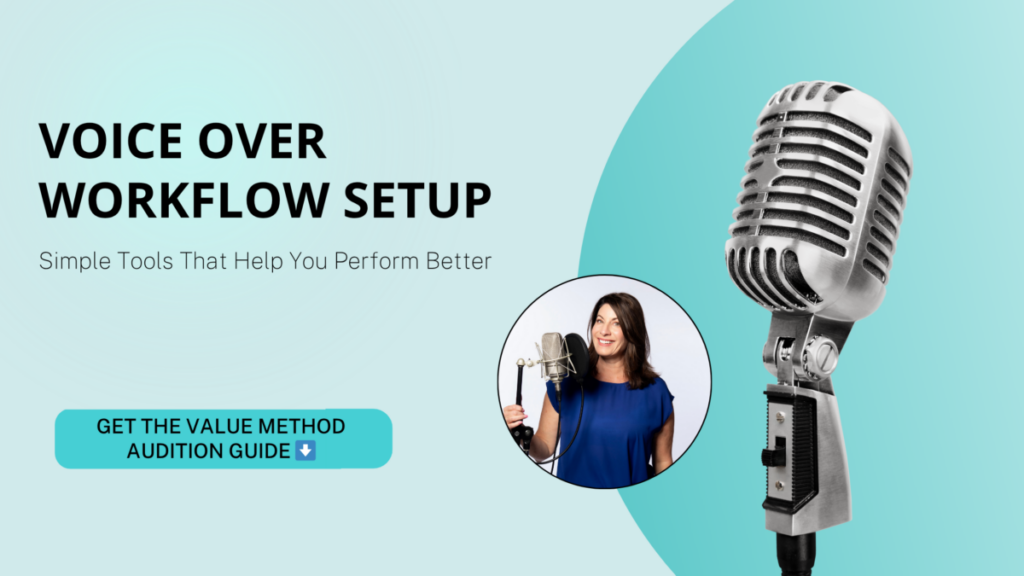
People ask me about my workflow setup all the time, especially when it comes to recording from home.
And honestly, one of my favorite tools is also one of the simplest…a tall music stand! That’s it.
No complicated studio gadget. No expensive custom setup. Just a simple tool that makes the recording process smoother and more comfortable.
After more than 20 years behind the mic, I’ve learned that a good voice over workflow setup is not about having the fanciest equipment. It’s about creating an environment that helps you stay focused on the performance.
Why Workflow Matters More Than Most Actors Realize
A lot of actors spend time thinking about microphones, plugins, or studio upgrades, but overlook the small workflow details that affect their sessions every single day.
Things like:
- Where your script sits
- Whether your posture feels natural
- How often you need to adjust equipment
- Whether your setup helps or distracts you
These small interruptions pull your attention away from the read. And when your focus breaks, your performance often does too.
A strong voice over workflow setup should support your process quietly in the background so you can stay connected to the script instead of constantly managing your environment.
The Simple Setup Tool I Use Constantly
One of the simplest workflow tools I use is a tall music stand.
I place a blanket over the top to help deaden some sound reflections, then use it as a spot for my laptop or script while recording.
It keeps everything at a comfortable, natural height so I’m not constantly looking down, shifting posture, or adjusting equipment mid-session.
That may sound like a small thing, but it makes a significant difference during longer recording sessions.
When your setup feels natural, it becomes much easier to stay focused on the performance itself.
As an online voice over coach, I see this often with actors recording from home. They are fighting their setup instead of working with it. Over time, those little frustrations can add up!
You Do Not Need a Complicated Studio
One of the biggest misconceptions in voice over is that you need an elaborate studio setup to perform professionally. You don’t!
You need a setup that supports consistency, comfort, and focus.
Some of the most effective workflow improvements are simple adjustments that make your sessions smoother:
- Keeping scripts at eye level
- Reducing unnecessary movement
- Creating a more comfortable recording posture
- Simplifying the space around you
These changes help conserve mental energy so more of your attention stays on acting.
A Good Voice Over Workflow Setup Supports Better Acting
The goal of your setup is not to impress people. It’s to remove friction.
When your environment works with you instead of against you, you can focus more fully on:
- Staying connected to the thought
- Making stronger acting choices
- Listening and adjusting naturally
- Delivering more grounded reads
A strong voice over workflow setup supports the performance instead of competing with it. And often, the best solutions are the simplest ones.
Build a Workflow You Can Rely On
The longer you work in voice over, the more you realize how valuable consistency becomes.
When your setup supports your process, sessions feel smoother, auditions feel less stressful, and you spend less energy managing distractions.
That is why workflow matters!
Not because it looks impressive, but because it helps you do your best work more consistently.
As an online voice over coach, I always encourage actors to simplify before they complicate. Start with tools and systems that genuinely support your process instead of chasing a “perfect” setup.
Want a Clearer Process for Your Reads?
A strong workflow setup helps, but the biggest improvement comes from having a repeatable process behind your performance choices.
That is exactly why I created the VALUE Method.
It gives actors a structured framework for approaching scripts with more clarity, stronger choices, and more consistency so you can spend less time guessing and more time delivering grounded, believable reads.
It’s often the small habits in your workflow that shape the quality of your reads over time. Constantly adjusting your setup, feeling uncomfortable while recording, or breaking your focus mid-read may not seem like a big deal in the moment, but those patterns can quietly affect your performance consistency.
That’s why it’s so important to pay attention to the systems and habits surrounding your recording process, not just the final audio itself.
If you’re starting to notice patterns in your reads that feel off but you’re not sure why, I also break down some of the most common voice over habits that hold actors back and how to fix them in another blog.